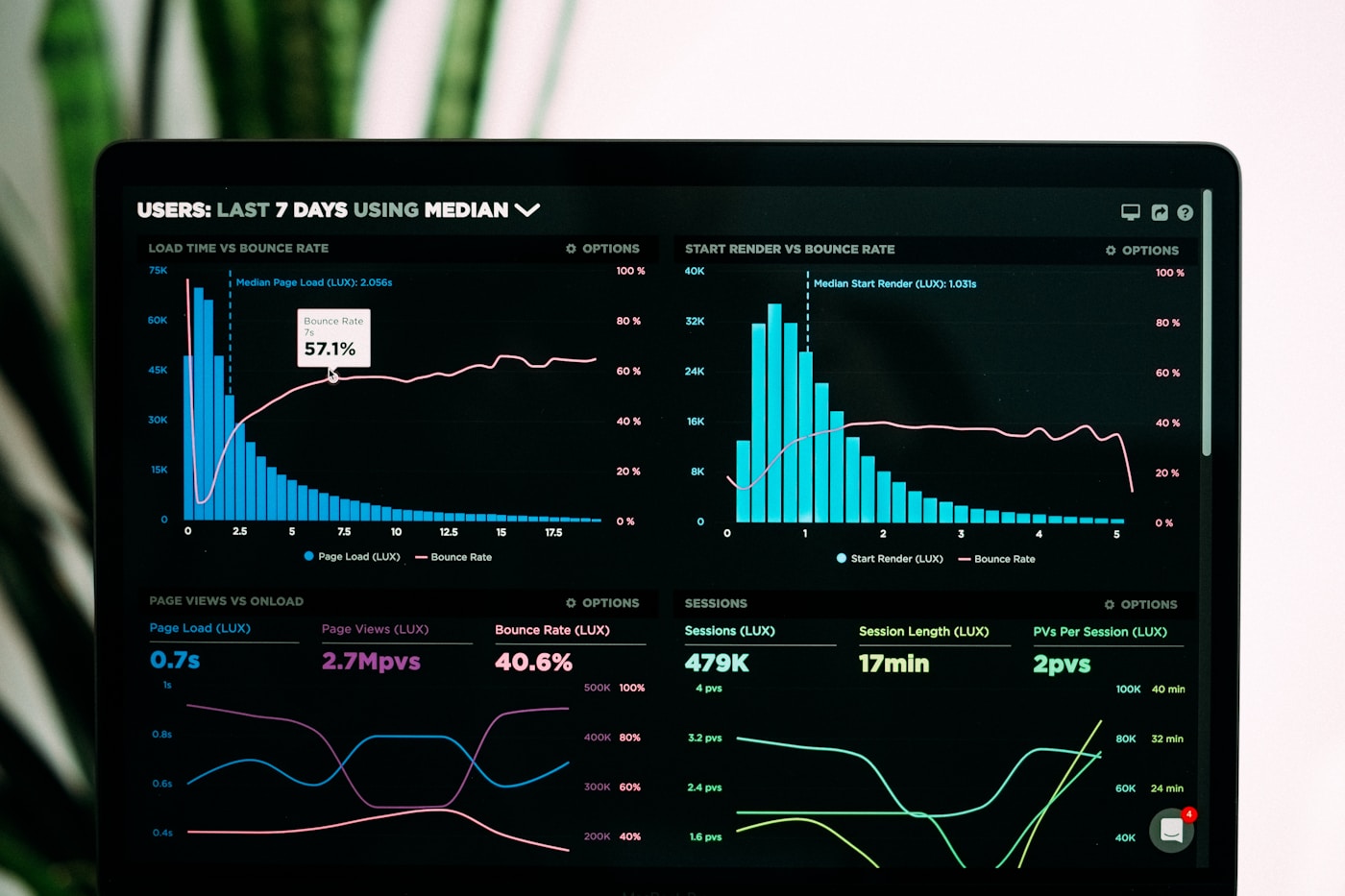
The air in the trading room hums with a controlled intensity, a symphony of flickering screens and hushed, rapid-fire conversations. Suddenly, a new alert blazes across a senior analyst's monitor: "Anomaly Detected: Unprecedented Cross-Market Volatility Indicator – 92% Probability of Significant Event within 48 Hours." The message isn't from a human colleague, but from an advanced predictive AI, a system that has just processed billions of data points across global markets in milliseconds. For a moment, the room stills.
A decade ago, such an alert might have been the product of days of human analysis, or worse, missed entirely until the market correction hit. Today, the AI has done the heavy lifting, identifying a pattern invisible to the human eye. But what happens next is where the true evolution of expertise unfolds. The analyst doesn't merely accept the AI's pronouncement; she leans in, her fingers flying across the keyboard to query the system. "Show me the causal factors. Display the confidence intervals. Are there historical parallels? What are the edge cases this model struggles with?" Her role is no longer to find the anomaly, but to interrogate it, to blend the AI's cold, probabilistic assessment with her own deep understanding of geopolitical currents, investor psychology, and the nuanced, unpredictable nature of human behavior. This isn't a story of AI replacing the expert; it's a vivid illustration of the AI-amplified expert, a human judgment redefined.
The Shifting Sands of Expertise
For generations, expertise was largely defined by the ability to master vast bodies of knowledge and apply complex analytical frameworks manually. From medical diagnosticians meticulously reviewing patient histories and scan results, to financial strategists poring over balance sheets and market trends, the human expert was the primary engine of data processing and insight generation. The advent of intelligent systems, particularly in the mid-2020s, has fundamentally altered this landscape.
These systems, powered by advanced machine learning and neural networks, can sift through petabytes of data, identify correlations, and even generate predictions with a speed and scale that no human could ever match. This capability has led to a profound shift in what it means to be an expert. The drudgery of data collection, the rote application of established algorithms, and the initial identification of patterns are increasingly being offloaded to AI. This doesn't diminish the expert; rather, it elevates them. Imagine a seasoned pilot with a state-of-the-art co-pilot that handles all routine checks, navigates complex air traffic, and constantly monitors engine performance. The human pilot is freed to focus on strategic decisions, unexpected weather phenomena, and the overall safety and mission of the flight. Similarly, the AI-amplified expert moves from being a primary data analyst to a strategic integrator, a critical validator, and an ethical steward.
The New Skillset: Interpretation, Validation, and Curation
The power of AI lies in its ability to process information, but its weakness often lies in its lack of context and common sense. This is where the amplified expert shines, developing a new set of critical skills:
Interpretation: Understanding the "Why"
Many powerful AI models, especially deep learning networks, operate as what are often termed "black boxes." They deliver highly accurate predictions or classifications, but the precise pathway of their decision-making can be opaque. For an expert to trust and effectively leverage these insights, they must be able to interpret the AI's output. This involves understanding the model's underlying architecture, the features it prioritizes, and the confidence levels it assigns to its conclusions.
The field of Explainable AI (XAI) is rapidly evolving to address this, providing tools and techniques that help human experts peek inside these black boxes. XAI might reveal which specific data points most influenced a medical diagnosis, or which market indicators led to a financial forecast. The human expert, armed with their domain knowledge, can then assess if the AI's logic aligns with real-world understanding, or if it's merely a spurious correlation. For instance, an AI might flag a rare disease based on subtle blood markers, but the physician's interpretation might confirm or challenge this based on the patient's overall clinical picture and life history, which the AI might not fully capture.
Validation: Bridging the Gap to Ground Truth
AI models are only as good as the data they are trained on, and even the most sophisticated systems can be prone to biases present in historical data or fail in novel situations. The expert's role in validation is crucial. This involves:
- Cross-referencing: Comparing AI-generated insights with other data sources, established theories, or even intuition derived from years of experience.
- Stress-testing: Deliberately challenging the AI with edge cases, unusual scenarios, or data intentionally designed to mislead, to understand its robustness and limitations.
- Real-world application: Observing how AI predictions play out in practice and feeding that feedback loop back into model refinement.
Consider an AI designed to optimize logistics routes. While highly efficient, a human logistics expert might validate its suggestions against real-time road closures, local traffic patterns not fully captured by static maps, or even social events impacting delivery times – factors that a purely data-driven model might initially overlook. This continuous validation process ensures that AI solutions remain grounded in reality.
Curation: Shaping the AI's Intelligence
The expert's role extends beyond merely reacting to AI output; they actively shape its intelligence. This involves:
- Data Labeling & Annotation: Providing high-quality, domain-specific labels for training data, teaching the AI what truly matters.
- Feature Engineering: Guiding data scientists on which features are most relevant for a given problem, leveraging their deep knowledge to prune noise and highlight signal.
- Feedback Loops: Continuously providing feedback on the AI's performance, identifying errors, biases, or areas where the model's understanding is incomplete. This iterative process of human-in-the-loop learning is vital for AI evolution.
In essence, the expert becomes the AI's mentor, guiding its learning process, correcting its misconceptions, and continually refining its understanding of the complex world it operates within.
Navigating the Ethical Labyrinth
As AI systems become more autonomous and influential, the ethical responsibilities of the human expert grow exponentially. AI can inadvertently perpetuate or even amplify societal biases if not carefully managed. Algorithms used in hiring, loan applications, or even criminal justice have been shown to reflect historical biases present in their training data, leading to unfair or discriminatory outcomes.
The AI-amplified expert acts as a moral compass, asking critical questions:
- Fairness: Is the AI's decision-making equitable across different demographic groups? Are there unintended disparate impacts?
- Transparency: Can we explain why the AI made a particular decision, especially in high-stakes scenarios?
- Accountability: Who is responsible when an AI makes a harmful error? The developer, the deploying organization, or the expert who validated it?
- Privacy: How is sensitive data being used and protected within the AI system?
The expert is tasked with identifying potential biases, designing mitigation strategies, and advocating for ethical deployment. They must understand not just the technical capabilities of the AI, but its societal implications, ensuring that these powerful tools serve humanity justly and responsibly. This often requires interdisciplinary collaboration, bringing together technical experts, ethicists, legal professionals, and community stakeholders.
Strategic Integration: Beyond the Algorithm
The ultimate value of the AI-amplified expert lies in their ability to integrate AI-derived insights into broader strategic decision-making and human-centric solutions. An AI might identify a highly profitable market segment, but it cannot intrinsically understand the nuances of brand perception, customer loyalty, or the long-term impact of a particular strategy on human employees.
Here, the expert translates the AI's analytical output into actionable business strategy. They assess:
- Feasibility: Is the AI's recommendation practical to implement given current resources, regulations, and organizational culture?
- Human Impact: How will this AI-driven decision affect employees, customers, and other stakeholders? Can it be implemented in a way that enhances the human experience, rather than detracting from it?
- Long-Term Vision: Does the AI's short-term optimization align with the organization's overarching mission and values?
- Competitive Landscape: How might competitors react to an AI-driven strategy? What are the strategic counter-moves?
In a world where AI can optimize supply chains, personalize customer experiences, and accelerate drug discovery, the human expert provides the wisdom to weave these technological advancements into a coherent, sustainable, and ethically sound organizational fabric. They ensure that technology serves business and human goals, rather than merely dictating them.
The Future of Augmented Intelligence
As we look towards the late 2020s and beyond, the trend is clear: the future of intelligence in organizations is augmented, not artificial in isolation. The most successful enterprises will be those that foster a symbiotic relationship between human experts and intelligent systems. This means investing not just in cutting-edge AI, but also in the continuous development of their human workforce, equipping them with the skills to interpret, validate, curate, and ethically steward these powerful tools.
The AI-amplified expert is not a relic of a bygone era, but the vanguard of a new one. They are the bridge between raw data and profound insight, between technological capability and ethical application, between algorithmic efficiency and human wisdom. Their judgment, far from being supplanted, is being refined, elevated, and amplified to new heights, navigating a world of unprecedented complexity and opportunity. The true power of AI is not in what it can do alone, but in what it enables us, the amplified experts, to achieve.
This article is for general informational purposes only and does not constitute professional advice.